
Dog Weak Back Legs Treatment | Canine Rehabilitation & Mobility Support
Have you noticed your dog’s back legs becoming weak?
- Is this arthritis in dogs?
- Could it be a spinal problem?
- Is my dog in pain?
- And most importantly - can weak back legs in dogs be treated or improved?
What Causes Weak Back Legs in Dogs?
In older dogs, weakness is often caused by:
- Arthritis (osteoarthritis)
- Muscle loss or reduced muscle strength
- Reduced joint mobility
- Age-related changes in movement and balance
In some cases, hind limb weakness may be related to neurological conditions, including:
- Intervertebral Disc Disease (IVDD)
- Degenerative spinal changes affecting nerve function

Can Weak Back Legs in Dogs Improve?
Research and clinical experience show that targeted rehabilitation therapies can significantly improve:
- Muscle mass and strength
- Joint mobility
- Balance and coordination
- Stability and confidence when walking
Canine Rehabilitation for Weak Back Legs
At our Canine Rehabilitation Centre, we perform a comprehensive mobility assessment to understand the underlying cause of your dog’s weakness.
During the evaluation we assess:
- Spinal mobility and areas of discomfort
- Joint range of motion
- Neurological function
- Weight shifting or compensation caused by pain
- Overall gait and movement patterns
Treatment options may include:
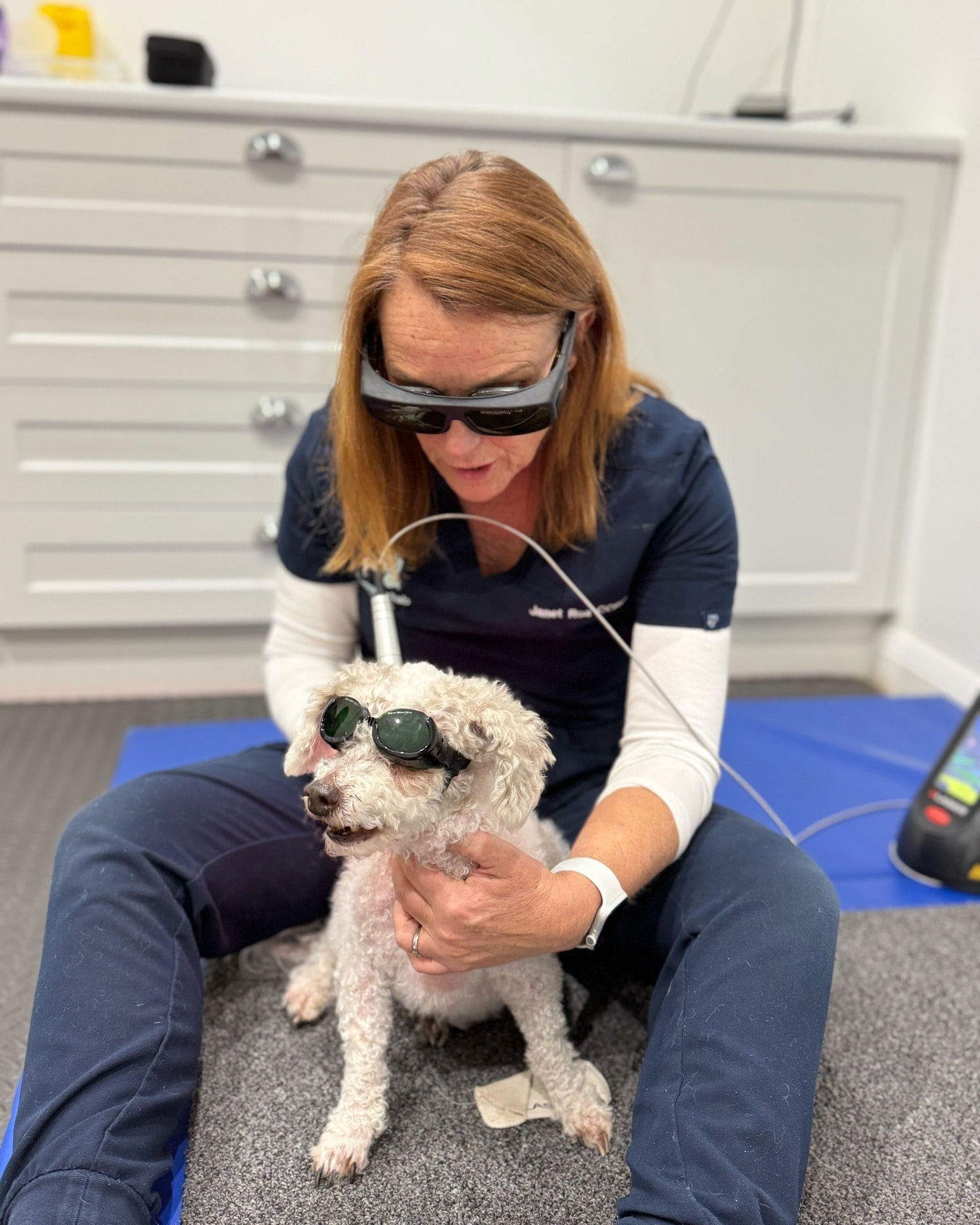
- Laser therapy to reduce inflammation and pain
- Manual therapy and joint mobilisation to improve flexibility
- Underwater treadmill therapy to safely rebuild strength with reduced joint stress
- Balance and strengthening exercises to improve stability and coordination
- A structured home exercise program to continue progress at home
Helping Your Dog Move Comfortably Again
Our goal is not simply to manage weakness - it is to help your dog move with strength, comfort, and confidence again.If you are noticing weakness in your dog’s back legs, difficulty standing, slipping on floors, or reduced mobility, early rehabilitation can make a significant difference to your dog’s quality of life.
Book a rehabilitation assessment with our Canine Rehabilitation team and let us help support your dog’s mobility and long-term wellbeing.
Why a Rehabilitation Assessment Comes Before the Underwater Treadmill
Many people see an underwater treadmill for dogs and assume it is simply exercise in water. In reality, the most important part of canine rehabilitation happens before your dog ever steps into the treadmill.
Every dog and every injury is different. Arthritis behaves differently to a muscle injury. Neurological conditions require a completely different approach to post-operative rehabilitation after surgery. Even two dogs with the same diagnosis may require very different rehabilitation programs depending on their strength, mobility, and stage of healing.
That’s why at our Canine Rehabilitation Centre, every dog receives a comprehensive rehabilitation assessment before beginning underwater treadmill therapy. This step is essential to ensure the therapy is safe, effective, and tailored specifically to your dog’s needs.
Comprehensive Canine Rehabilitation Assessment
Before starting hydrotherapy or underwater treadmill therapy, our Canine Rehabilitation Practitioner performs a detailed mobility assessment.
This evaluation includes:
- Gait analysis to assess how your dog walks and moves
- Joint range of motion testing
- Muscle symmetry and muscle loss assessment
- Neurological function evaluation
- Pain and inflammation assessment
- Review of surgical history or previous injuries
- Identification of compensatory movement patterns


For more info on underwater treadmill click here
Why Underwater Treadmill Settings Matter
Underwater treadmill therapy is not a one-size-fits-all treatment. The water level, treadmill speed, and incline are carefully adjusted depending on your dog’s condition and stage of recovery.
For example:
- Higher water levels reduce weight bearing and decrease stress on joints
- Lower water levels increase weight bearing and strengthen muscles
- Incline adjustments help build strength and endurance
- Speed adjustments help maintain normal stride length and coordination
Expert-Guided Canine Rehabilitation
This is why underwater treadmill therapy should always be guided by a Certified Canine Rehabilitation Practitioner. Rehabilitation is not simply about operating equipment - it requires an understanding of biomechanics, surgical healing timelines, neurological conditions, and progressive strengthening programs. When guided by clinical expertise and a thorough rehabilitation assessment, the underwater treadmill becomes a powerful therapeutic tool.
Individualised Rehabilitation for Every Dog
At our centre, rehabilitation is never generic. Each program is structured and individualised based on your dog’s condition, diagnosis, and recovery goals. Our approach combines clinical assessment, targeted rehabilitation therapies, and advanced equipment such as the underwater treadmill to support safe recovery, improved mobility, and long-term joint health.
This isn’t just hydrotherapy - it’s evidence-based canine rehabilitation designed specifically for your dog.
