
Manual Therapy
During your dog’s evaluation our practitioner may have identified tight or painful areas that are not necessarily obvious when watching them move.
Manual therapy is an important part of canine rehabilitation and involves hands-on treatment performed by our Canine Rehabilitation Practitioner to help improve mobility, reduce pain, and
restore normal movement in your dog.
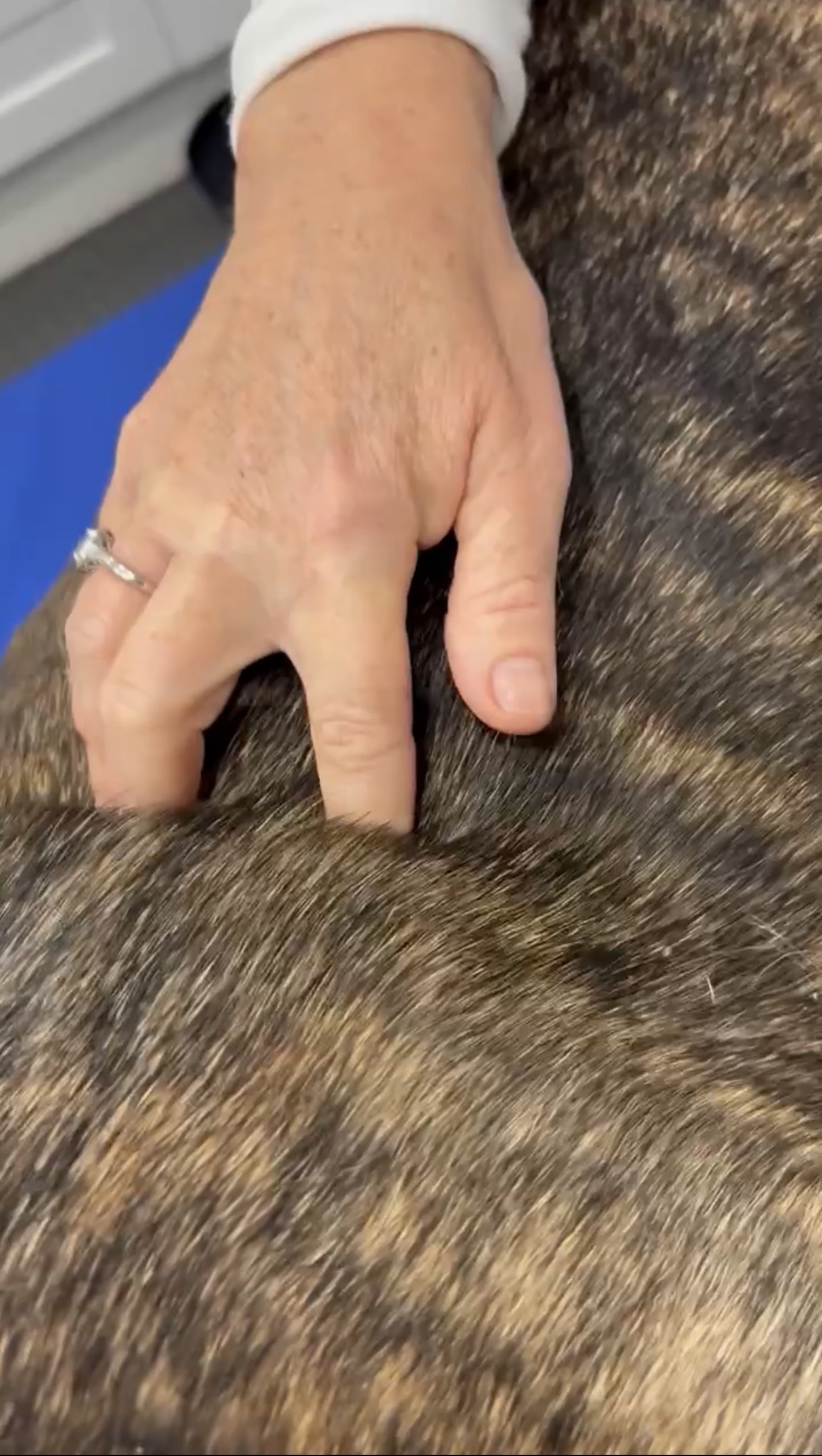
During a manual therapy session, gentle hands on techniques are used to treat limitations, pain or stiffness in soft tissues (muscles) as well as joints . This can include massage, soft tissue mobilization, joint mobilizations and glides as well as prolonged passive stretching
Why Manual Therapy Is Important
Many dogs develop tight muscles, restricted joints, and abnormal movement patterns after injury, surgery, or with conditions such as arthritis. If these issues are not addressed, they can lead to ongoing discomfort or cause strain in other parts of the body.
Manual therapy helps to:
- Improve joint flexibility and mobility
- Reduce muscle tension and discomfort
- Improve circulation and tissue health
- Restore more normal movement patterns
- Prepare the body for safe strengthening exercises

Preparing the Body for Underwater Treadmill Therapy (Hydrotherapy)
Manual therapy is also a very important step before using the underwater treadmill. If joints are stiff, muscles are tight, or your dog is compensating for pain, these patterns can carry into treadmill exercise and reinforce incorrect movement. By improving joint mobility and muscle flexibility first, manual therapy helps ensure that your dog can use the underwater treadmill more effectively and safely, allowing them to strengthen the correct muscles and develop healthier movement patterns.
Combining Manual Therapy With Laser Therapy
Manual therapy is often combined with laser therapy as part of a comprehensive rehabilitation session. While laser therapy helps reduce pain, inflammation, and support tissue healing, manual therapy focuses on improving movement and restoring flexibility. Together, these treatments help create the best environment for your dog to move comfortably, rebuild strength, and recover more effectively. Our goal is always to support safe, structured rehabilitation that helps your dog regain mobility, confidence, and long-term comfort.
